A Life in Korea without a Korean Phone Number
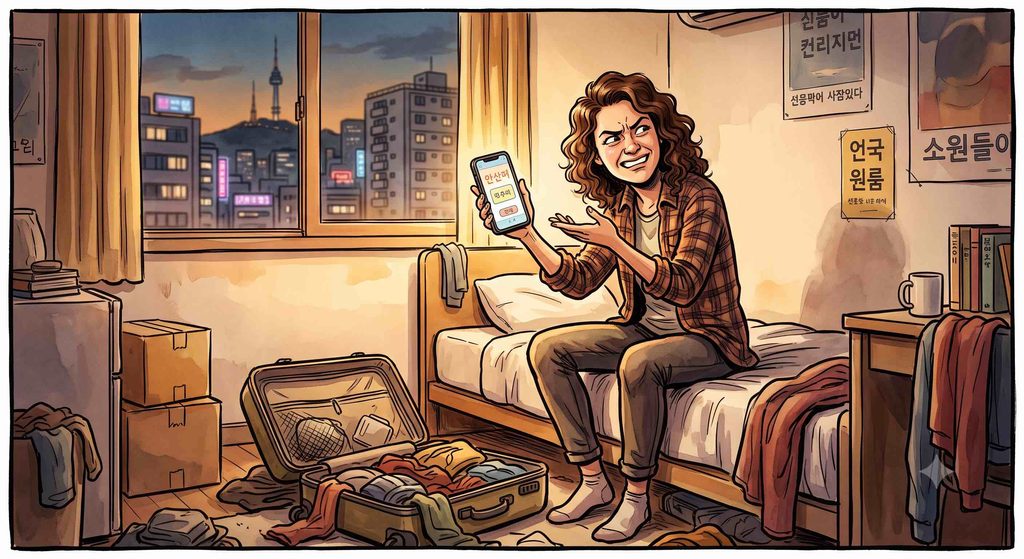
Okay, so picture this. You’ve just landed in Korea, you’ve dumped your suitcases in your new place, and you’re feeling great. First mission: get your life set up. Download a delivery app so you can order some food. Sign up for KakaoTalk so you can actually text people. Maybe try to open a bank account or get a transit card sorted.
And then… every single app hits you with the same wall: “Please enter your phone number for verification.” You type in your home country number. Rejected. You try your data-only travel eSIM. Rejected. Suddenly the excitement of day one turns into you sitting on your bed, phone in hand, wondering how something this basic is this hard.
If that’s you right now — welcome to the club. This is genuinely one of the most common (and most annoying) things nobody tells you about before you move here for a month or longer. So let’s break down why it happens, and more importantly, what you can actually do about it.
Why Does Korea Care So Much About Your Phone Number?
Here’s the short version: Korea runs almost everything — banking, payments, messaging, even government paperwork — through something called Self-Verification (bon-in-in-jeung), or “Real-name Verification.” The idea is that your phone number is tied directly to your legal name through your carrier, and that link is used as proof of identity everywhere else.
For Korean citizens, this is seamless. Their phone is registered to their resident registration number the moment they get a SIM, so every app can instantly confirm “yes, this really is that person.“
For foreigners, though, this system assumes you have an ARC (Alien Registration Card) — the ID card you get after registering with immigration, which usually takes a couple of weeks after arrival. Until you have one, your options for a “real” Korean number are limited, and most services simply can’t verify you the normal way. It’s not personal, and it’s not a bug — it’s just a system built around an assumption that doesn’t quite fit someone who just got off a plane last week. So it is crucial for you to register for the ARC ID card the first thing after arriving in Korea.
What Actually Breaks Without a Korean Number
Just so you know what you’re up against, here’s the kind of stuff that typically needs a properly registered Korean number:
- KakaoTalk and Naver accounts with full features
- KakaoPay, NaverPay, Toss and most mobile payment apps
- Banking apps for everyday account use
- PASS, the identity app that a huge chunk of Korean websites and government portals use as their default verification method
- Signing up for delivery apps, some subscription services, and all online shopping sites(including Coupang)
Basically, if an app wants to be 100% sure you’re really you, it’s going to ask for a number that’s registered to your legal name with a Korean carrier — and a foreign number or a random prepaid SIM often won’t cut it.
So What Can You Actually Do in the Meantime?

The good news: you’re not stuck. There are a handful of real workarounds depending on what you’re trying to accomplish.
1. Get WOWPASS for anything payment-related
If your main frustration is payments — not being able to use Kakao Pay, Naver Pay, or getting your card rejected at self-checkout kiosks — WOWPASS is honestly the easiest fix. It’s a prepaid card made specifically for foreigners, and you can get one from bright orange kiosks at the airport, major subway stations, and tourist areas. You load it with cash or your foreign card, and it works like a local debit card almost everywhere, plus it doubles as a T-money transit card.
No ARC, no Korean number, no verification hoops — just your passport to set it up. It genuinely solves 80% of the “I can’t pay for anything” panic.
2. Grab a prepaid SIM or eSIM with an actual Korean number
A data-only travel eSIM is fine for maps and Instagram, but it usually won’t come with an actual Korean 010 number, which means texting-based verification still won’t work. Instead, look for a prepaid SIM or eSIM that includes voice and SMS — these can usually be set up with just your passport, no ARC required, and they give you a real 010 number for the length of the plan. This will get basic things like a KakaoTalk sign-up working, even though some stricter identity checks (like PASS) still won’t pass because the line is registered on your passport rather than your ARC.
3. Use the cash-friendly, no-verification options for everyday stuff
For transit, you can just buy a T-money card with cash at any convenience store — no ID needed at all. For payments, plenty of places in Korea now accept Alipay, WeChat Pay, or your regular Visa/Mastercard directly, so you’re not actually locked out of daily life even before anything is verified. It’s worth remembering that “Korean apps don’t work for me yet” doesn’t mean “I can’t function” — there’s almost always a cash or card-based route around it.
4. The real long-term fix: get your ARC, then upgrade your plan
This is the one that actually solves everything. Once your ARC comes through, head to any carrier store (KT, SKT, LG U+, or a budget MVNO) with your ARC and passport, and either get a new postpaid line or update your existing prepaid line so it’s registered under your ARC instead of your passport. Within about a week of that update, most banking apps, PASS, and government portals start working normally. This single step is genuinely the moment everything clicks into place — it’s worth prioritizing as soon as your ARC is in hand.
5. Ask about i-PIN if it’s specifically a government site giving you trouble
If you’re dealing with an official government portal rather than a private app, some of them accept an alternative called i-PIN, a government-issued online identification number that doesn’t rely on your phone at all. It’s not universally accepted, but it’s worth asking about if a phone-based method keeps failing on a specific site.
A Rough Timeline, So You’re Not Guessing
- Day 1, no ARC yet: Grab a WOWPASS at the airport, and pick up a prepaid SIM/eSIM with a Korean number if you want basic texting and app sign-ups working.
- Week 2–4, ARC arrives: Head to a carrier store and get your phone line properly registered under your ARC. This is the real unlock moment.
- After that: Most banking, PASS, and payment app issues resolve within days of the update.
The Bottom Line
Nobody really explains this before you land, so if you’re a few days into Korea feeling like the entire country’s tech ecosystem is personally rejecting you — it’s not you, it’s just a system that wasn’t built with brand-new arrivals in mind.
Between WOWPASS for payments, a proper prepaid number for basic sign-ups, and getting your ARC-linked line sorted as soon as possible, you’ll be fully verified faster than it feels like right now. It’s one of those small, invisible hurdles that nobody warns you about — but once you’re through it, you basically forget it was ever a problem.